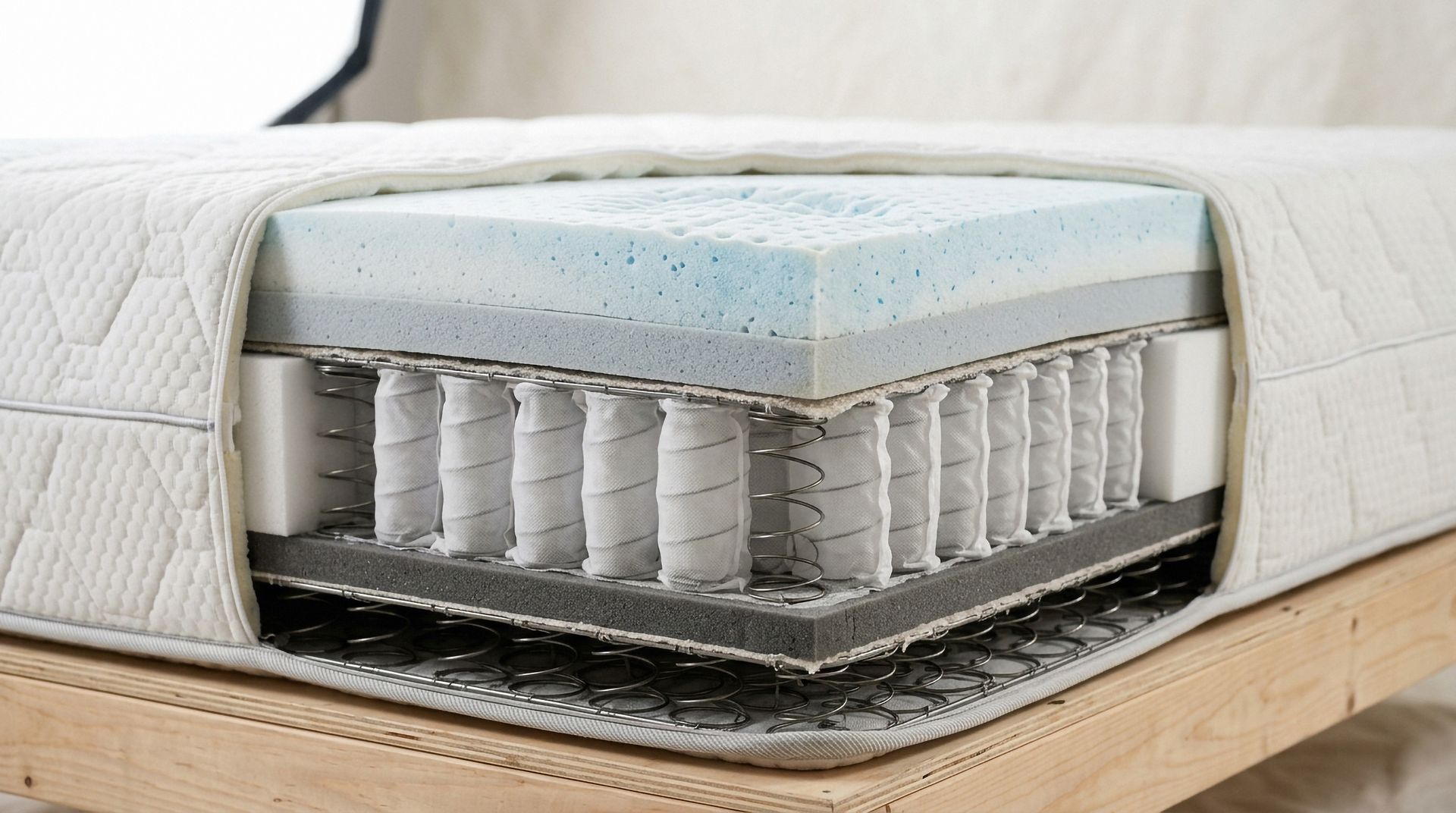
Why Mattress Comfort Problems Are Often Misdiagnosed


If you've ever described a mattress as "too firm" or "too soft," you're not alone. These are some of the most common complaints people have when shopping for a new bed or trying to figure out why they aren't sleeping well.
However, those descriptions don't always identify the real problem.
A mattress that feels uncomfortable isn't necessarily the wrong firmness. In many cases, discomfort is caused by issues like poor pressure relief, inadequate lumbar support, an incorrect pillow, an aging foundation or comfort layers that simply aren't the right match for your body and sleep position.
"Too Firm" Can Mean More Than One Thing
When someone says a mattress feels too firm, they often mean it causes pressure or discomfort rather than being structurally too hard.
For example, you may experience:
- Shoulder pain while side sleeping
- Hip soreness
- Tingling in your arms
- Frequent tossing and turning
These symptoms are often related to insufficient pressure relief rather than overall mattress firmness.
A supportive mattress can still feel comfortable if its comfort layers allow your shoulders and hips to sink in just enough to reduce pressure while keeping the rest of your body properly aligned.
If the comfort layers are too thin or don't contour well to your body, even a high-quality mattress can feel harsh. In some cases, the solution isn't a softer mattress; it may simply be a model with better pressure-relieving materials.
"Too Soft" May Actually Mean Not Supportive Enough
On the opposite end of the spectrum, many people assume a mattress is too soft because they wake up with lower back pain or feel like they're sinking too deeply.
While excessive softness can contribute to these issues, lack of support is often the real culprit.
Support refers to how well a mattress keeps your spine in a neutral position throughout the night. If your hips sink farther than your shoulders or your lower back isn't properly supported, muscles remain engaged while you sleep, leading to stiffness and discomfort the next morning.
A mattress can feel plush on the surface while still providing excellent support underneath. Likewise, a firm mattress can still fail to support your body properly if its internal structure isn't designed to keep your spine aligned.
How Pressure Relief and Support Get Confused
Pressure relief focuses on cushioning areas like the shoulders, hips and knees to reduce stress on joints and improve circulation.
Support focuses on maintaining healthy spinal alignment from your neck to your lower back.
Many shoppers mistakenly assume they must choose between a soft mattress for comfort or a firm mattress for support. In reality, a quality mattress should provide both.
The ideal mattress allows heavier parts of your body to settle slightly into the surface while preventing excessive sinking that throws your spine out of alignment.
When the Foundation Is the Real Problem
A worn-out box spring, broken foundation or unsupportive bed frame can cause even a relatively new mattress to sag, shift or lose its intended performance.
Signs your foundation may be contributing to discomfort include:
- Visible sagging
- Squeaking or movement
- Uneven support
- Bowing in the middle
- Noticeable dips despite a newer mattress
Placing a high-quality mattress on an unstable foundation limits its ability to provide proper support and can even shorten its lifespan.
Don't Overlook Your Pillow
Even if your mattress supports your back perfectly, the wrong pillow height can place your neck at an awkward angle for hours each night.
Side sleepers often need a taller pillow than back sleepers, while stomach sleepers typically require a much thinner pillow. If you've recently purchased a new mattress, your old pillow may no longer provide the correct level of support because your body now rests at a different height.
Why Local Mattress Adjustments Can Solve the Right Problem
At Twilight Bedding, we understand that every sleeper is different. Our knowledgeable team takes the time to identify the source of your discomfort and recommend solutions that fit your unique needs.
Visit a Twilight Bedding showroom today, or call our Spokane showroom at (509) 926-2333 or our North Spokane showroom at (509) 413-2431 to learn more about our mattress customization options.