Why Two Mattresses With the Same Firmness Rating Can Feel Completely Different


Mattress firmness ratings are a lot like clothing or shoe sizes. Manufacturers do not follow a universal firmness scale, so one brand’s medium-firm mattress may feel closer to another brand’s firm model. That can be especially frustrating for people ordering a mattress online, only to discover that the bed they receive feels very different from what they expected.
Firmness labels can be useful, but they only tell part of the story. A mattress’s materials, construction, support system and comfort layers all influence how it feels once you actually lie down.
Firmness Scales Are Subjective
Most manufacturers use a firmness scale ranging from 1 to 10, with 1 being extremely soft and 10 being extremely firm.
However, there is no universal testing standard that every mattress company follows when assigning those ratings.
What one manufacturer considers a 6 out of 10 may feel more like an 8 to another company.
In addition, individual body types affect firmness perception. A mattress that feels medium-firm to a 130-pound sleeper may feel significantly softer to someone weighing 220 pounds because the heavier sleeper sinks deeper into the comfort layers.
Sleep position also matters. Side sleepers often perceive mattresses as firmer because more pressure is placed on the shoulders and hips, while back sleepers may experience the same mattress as more balanced and supportive.
Surface Feel and Support Are Not the Same Thing
Another reason mattresses with the same firmness rating can feel dramatically different is the distinction between surface feel and support.
Surface feel refers to what you notice immediately when you lie down, including:
- Cushioning
- Plushness
- Pressure relief
- Initial softness
Support refers to how well the mattress maintains spinal alignment and prevents excessive sinking throughout the night.
Two mattresses may both be rated as medium-firm, but one may have a plush pillow-top that creates a soft, cushioned surface before reaching a supportive core. The other may have minimal padding and feel firmer right away, even if both ultimately provide similar support levels.
Many shoppers mistakenly equate softness with poor support or firmness with better support. In reality, a mattress can feel soft on top while still offering excellent support underneath.
Latex Mattresses Feel Different Than Memory Foam
Latex and memory foam are often assigned similar firmness ratings, yet they can feel very different.
Latex tends to:
- Feel more responsive
- Offer a buoyant sensation
- Allow easier movement
- Provide gentle contouring
- Sleep cooler for many users
Memory foam typically:
- Conforms closely to the body
- Creates a deeper "hugging" sensation
- Responds more slowly to movement
- Relieves pressure through contouring
- Reduces motion transfer
A medium-firm latex mattress may feel noticeably firmer and more responsive than a medium-firm memory foam mattress because the sleeper remains more elevated on the surface.
Coil Systems Influence Mattress Feel
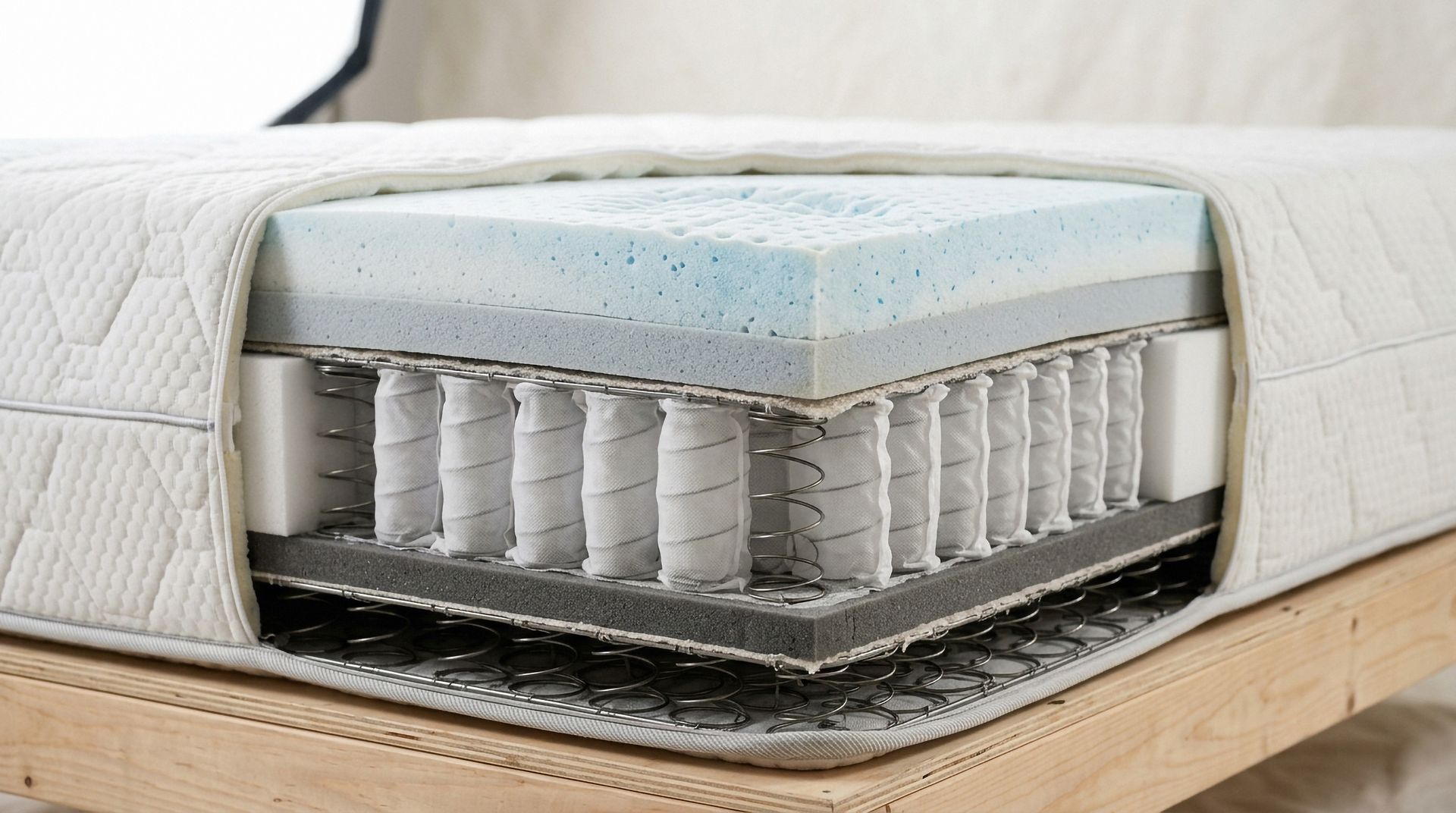
Coil systems in innerspring and hybrid mattresses can dramatically change how a mattress feels beneath the comfort layers.
Some designs use pocketed coils, while others use more traditional connected coil systems. Even when two mattresses use similar foam or latex comfort layers, the coil system underneath can make one feel firmer, springier, softer, more stable or more contouring.
How firm an innerspring or hybrid mattress feels may depend on:
- Coil count
- Coil height
- Coil gauge (thickness)
- Zoning design
- Edge support construction
Construction Matters More Than a Firmness Number
Perhaps the biggest reason firmness ratings can be misleading is that they fail to account for the overall mattress design. Factors influencing mattress feel include:
- Thickness of comfort layers
- Density of foam materials
- Type of latex used
- Coil system design
- Quilting materials
- Pillow-top construction
- Transition layers
Avoid Making a Big Decision Based on an Arbitrary Number
You may spend roughly a third of your time on that mattress for as long as you own it, so the difference between “close enough” and genuinely comfortable can have a real effect on your quality of life.
Whenever possible, test the mattress in person. Pay attention to how your shoulders, hips and lower back feel after you have been lying there for several minutes. A number on a product page may help narrow your options, but it cannot tell you whether a mattress actually supports your body the way it should.
At Twilight Bedding, we help customers look beyond simple firmness ratings to find a mattress that truly fits their sleep needs.
Our selection includes latex, hybrid and innerspring mattresses designed to accommodate a wide range of sleeping styles and comfort preferences.
Visit us at Twilight Bedding to try our mattresses in person or call our North Spokane showroom at (509) 413-2431 or our Spokane Valley showroom at (509) 926-2333 for more information.