What Makes a Mattress Easy or Difficult to Turn Over On?


You might not consciously notice how often you move during the night. However, your body is constantly making small adjustments as you sleep. Some mattresses make those position changes feel smooth and natural, while others resist movement or allow the body to sink deeply enough that repositioning takes more effort.
The difference often comes down to responsiveness, surface friction, contouring and how deeply your body sinks into the mattress.
Contouring vs. Trapping
Contouring means the mattress conforms to your body's shape. This can provide pressure relief by allowing areas such as your shoulders and hips to sink into the comfort layers.
But there's a point where contouring can become excessive. If your body sinks deeply into slow-responding materials, you may have to work against that indentation when you want to change positions.
That's what can create the sensation of being "stuck" in a mattress.
A mattress doesn't have to be extremely firm to make movement easy, and a soft mattress isn't automatically difficult to move on. The key is how quickly and effectively the materials respond when you shift your weight.
Responsiveness Helps You Move
Responsiveness describes how quickly a mattress reacts when pressure is removed or moved to another area.
Imagine pressing your hand into the mattress and lifting it. Some materials quickly return to their original shape. Others take several seconds to recover.
That difference becomes noticeable when your entire body is changing positions.
A responsive mattress can push back against your movement rather than continuing to hold the shape of your previous position. This can make rolling from your back to your side, or getting up from bed, feel more natural.
This is one reason traditional innerspring mattresses and some latex constructions can feel particularly "lively." Their materials can respond quickly as you move rather than creating a deep, slow-moving impression.
Deep Sink Can Make Position Changes Harder
Deep sink isn't necessarily bad. Some sleepers love the feeling of being surrounded by the mattress, particularly when looking for pressure relief.
But deeper sink can affect mobility.
When your shoulders, hips or torso settle deeply into the comfort layers, changing positions may require you to first climb out of the indentation you've created. Instead of simply rolling, your body has to move upward and sideways against the mattress.
The effect can be especially noticeable for people who naturally change positions frequently.
A mattress with more surface-level cushioning and stronger underlying support may allow you to feel cushioned without sinking as deeply into the bed.
Surface Friction Plays a Role, Too
Higher-friction materials can create more resistance when you're shifting. Smooth, responsive surfaces may make repositioning feel easier.
Of course, you don't want a mattress to feel like you're sliding across it. Some surface grip helps keep you comfortably positioned.
The goal is balance: enough cushioning and traction to keep you supported, but not so much resistance that ordinary movements become difficult.
Your sheets also matter. Certain bedding materials can add friction or bunch underneath you, making movement feel different from what you experienced when testing the mattress without your usual bedding.
Coils Can Help With Movement
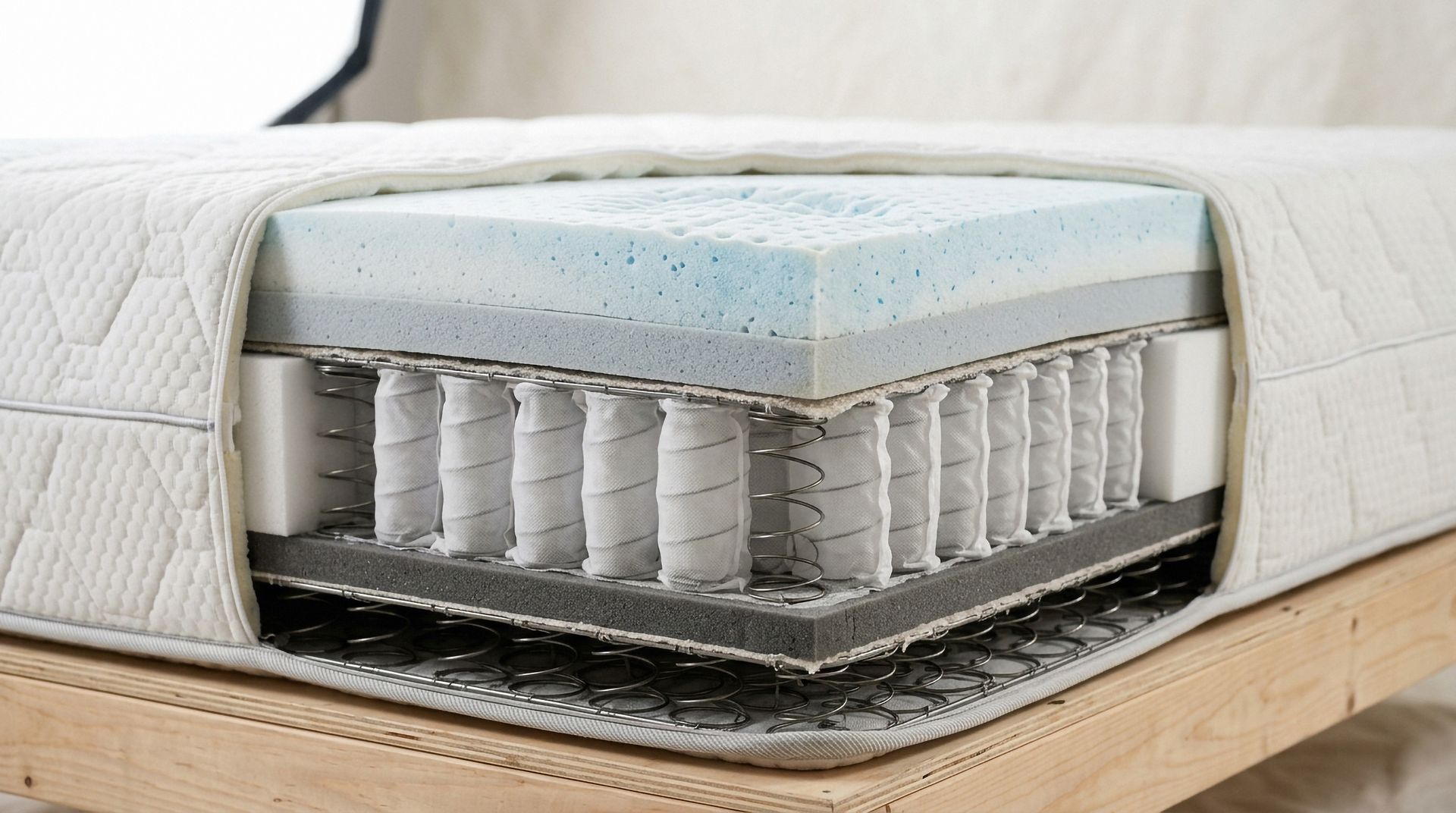
Coils can provide a degree of springiness that assists with movement. When you shift your weight, the coils respond to that change in pressure and can contribute to a more buoyant sensation.
Different coil designs behave differently, however. A mattress's overall feel depends on how the coils interact with the comfort layers above them.
That's why looking only at whether a mattress contains coils isn't enough. The thickness and type of comfort materials, coil construction and overall layering all contribute to the experience.
Why Movement Matters Even If You Don't Notice It
You might be thinking, I don't wake up when I turn over, so why should I care?
Because you don't necessarily need to become fully conscious of a movement for the mattress to affect it.
Your body can make dozens of small adjustments throughout the night without you remembering them in the morning. If the mattress makes those movements unnecessarily difficult, your body may have to exert more effort to reposition itself.
That doesn't mean a responsive mattress will automatically improve everyone's sleep. Comfort and support remain highly personal. But ease of movement is another characteristic worth considering alongside firmness, pressure relief and temperature regulation.
Test How Our Mattresses Let You Move in One of Our Spokane Showrooms
Twilight Bedding offers a variety of mattress constructions that can give sleepers different combinations of cushioning, responsiveness and support. Instead of choosing based solely on a firmness label or marketing description, take the time to experience how a mattress responds when you actually move on it.
Contact our North Spokane location at (509) 413-2431 or our Spokane location at (509) 926-2333 to find a sleep surface that cushions your body without making you feel trapped by it.