Why Sleeping Near the Edge Is a Completely Different Test of a Mattress


When people test a mattress, they often lie down in the middle and decide whether it feels comfortable. That makes sense, but it doesn't tell the whole story.
The middle of a mattress and the area near its perimeter can behave very differently under the same person. For someone who naturally sleeps close to the edge, that difference isn't a minor detail. It can affect how supported, stable and comfortable the mattress feels every night.
The Mattress Has to Handle Weight Differently
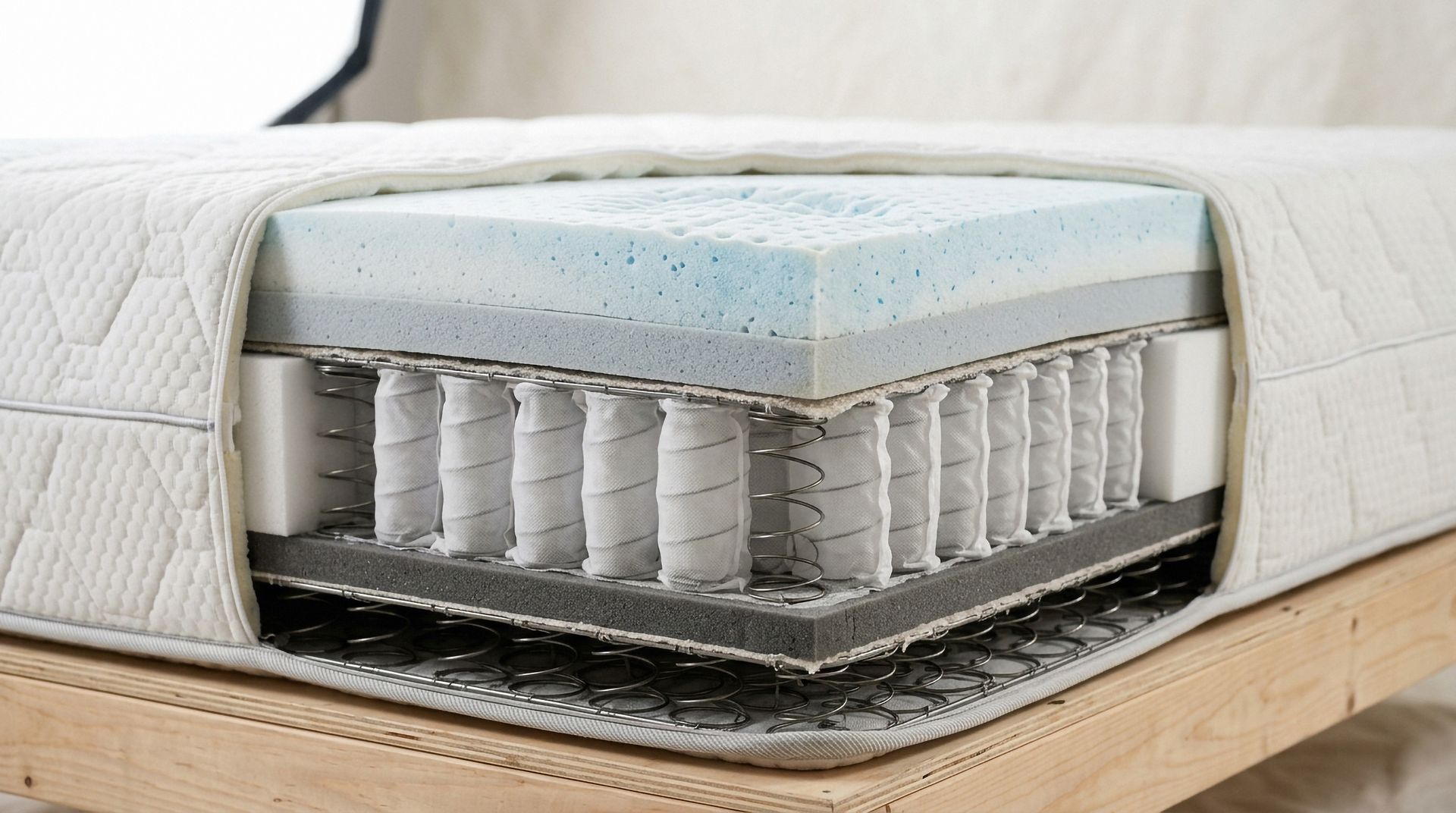
Depending on the construction, a mattress may contain layers of springs, foam, latex, padding and other materials that work together to distribute body weight.
When you're lying in the center, your weight is surrounded by supporting material on multiple sides. Move closer to the perimeter, and the mechanics change.
There's less mattress surface outside your body to help distribute the load. The support system near the edge has to manage more of the downward force without allowing excessive compression or instability.
This is one reason a mattress can feel perfectly supportive in the center but noticeably softer or less stable several inches from the edge.
Six Inches Can Make a Difference
Imagine two sleepers lying on identical mattresses.
Person A sleeps directly in the center.
Person B naturally sleeps about six inches from the edge.
Although they're only separated by a relatively small distance, they're interacting with different portions of the mattress's support system.
The person near the edge may notice more compression beneath their hips or shoulders, depending on their sleeping position. They may also experience a different sensation when changing positions or getting out of bed.
For a person who consistently sleeps near the perimeter, testing only the center of the mattress isn't really testing the part of the mattress they use most.
That's why edge behavior should be considered part of the overall mattress experience, not merely an occasional feature used when sitting down.
Couples Use More of the Mattress Than You Think
A couple doesn't simply divide a mattress neatly down the middle.
Each person moves during the night. One person may sleep closer to the center while the other prefers more space. People change positions, spread out, curl up and shift toward or away from their partner.
As a result, couples frequently use areas of the mattress that a single sleeper might never test.
This is especially relevant on a smaller mattress. When two people share the same sleeping surface, the usable area near the perimeter becomes more important because neither person necessarily wants to sleep directly against the other.
Good perimeter support can help make more of the mattress feel usable.
Getting In and Out of Bed Is Another Edge Test
Every time you sit down on the mattress, you're putting concentrated weight on a relatively small area. The same thing happens when you swing your legs out of bed in the morning.
A mattress with substantial perimeter support may feel more stable during these movements. A softer or less reinforced edge may compress farther under the same load.
This doesn't mean that firmer is always better. Some sleepers specifically prefer a softer feel. The important question is whether the edge behaves in a way that matches how you actually use the bed.
Your Sleeping Position Changes the Experience
A side sleeper may place significant pressure around the shoulders and hips. A back sleeper distributes weight differently across the torso, hips and legs. A stomach sleeper creates another loading pattern.
Move those pressure points closer to the perimeter and the mattress may respond differently than it does in the center.
This is why a quick sit test or a few seconds lying down toward the middle of a mattress isn't necessarily enough. If you know you sleep close to the edge, deliberately test that position when you’re in the showroom.
Lie down where you normally would. Roll toward the perimeter. Change positions. Pay attention to whether you still feel supported or whether you instinctively move back toward the center.
Locally Made Mattresses Designed for Consistent Support
If you're a perimeter sleeper or share a mattress with a partner, be sure to test a mattress the way you actually sleep rather than judging it from a quick lie-down near the center.
Twilight Bedding can help you compare mattress options based on how you actually sleep. Call our North Spokane showroom at (509) 413-2431 or our Spokane showroom at (509) 926-2333 to learn more.